BMW Engine Platform
BMW B48 Tuning Guide
The BMW B48 is the 2.0-litre turbocharged four-cylinder at the heart of many modern BMW and MINI models. This guide explains its calibration context, the ECU and transmission variations to identify, and the checks that matter before a file is prepared.
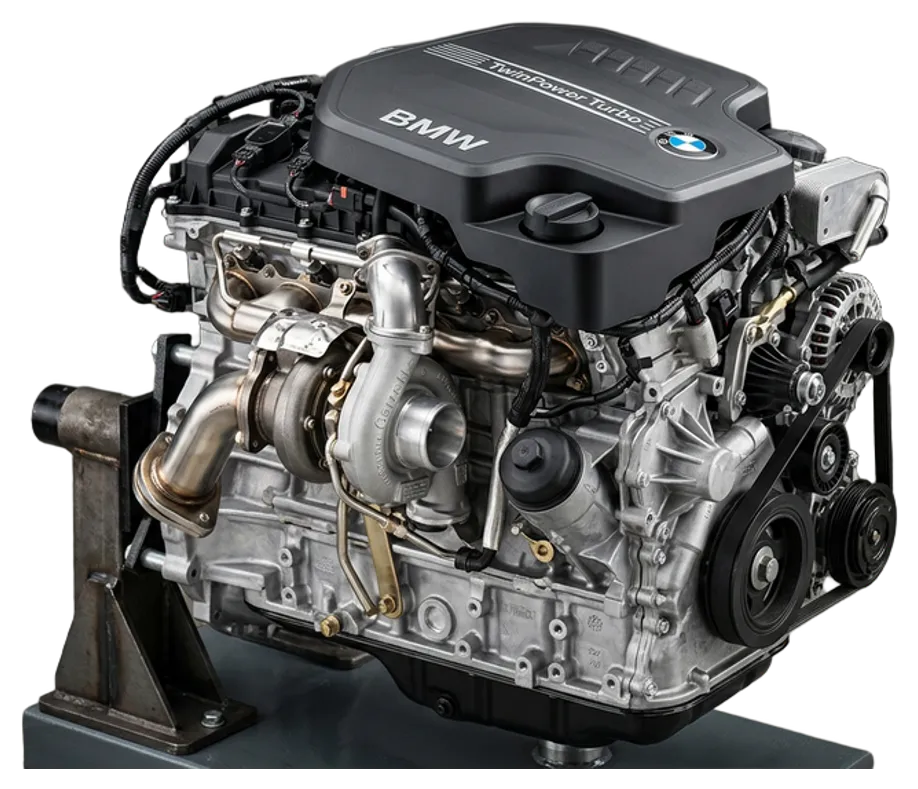
BMW B48 Engine Overview
The B48 arrived in 2014 as part of BMW’s modular engine family, sharing its design principles with the B58 inline-six and the B47 diesel. It replaced the N20 and has since been fitted to a long list of models, from the F30 and G20 3 Series to the G29 Z4 and several X models.
Its applications span both rear-wheel-drive and front-wheel-drive platforms, and output differs considerably between versions such as the 320i and 330i. Those versions differ in software and, in some cases, in hardware, which is why two B48 cars can need quite different calibrations.
The DME platform also changed during production, and later units require a different read and write workflow from earlier ones. Fuel quality, the fitted gearbox and any intake or intercooler upgrades then shape how far a calibration should go.
Configuration
2.0L Inline-Four
Introduced
2014
Turbo System
Single Twin-Scroll Turbo
Key Technology
Modular B-Series Architecture
Choose Your B48 Tuning Path
The right path for a B48 depends on its condition, the fuel you use, the DME generation and any hardware already fitted. Start with Stage 1 for a healthy standard car, and review the reliability checks first if its history is unclear.
Popular BMW B48 Models
The B48 is fitted to very different vehicles, from compact front-wheel-drive models to the rear-wheel-drive 3 Series. Each pairing can use a different DME, gearbox and cooling layout, so the model page is the best starting point.
BMW M135i xDrive F40
F40 · c. 2019–2024BMW 230i F22
F22 / F23 · c. 2016–2021BMW 330i F30
F30 / F31 / F34 · c. 2016–2019BMW 320i G20
G20 / G21 · c. 2019–presentBMW 530i G30
G30 / G31 · c. 2017–2023BMW Z4 sDrive30i G29
G29 · c. 2019–presentBMW X3 xDrive30i G01
G01 · c. 2017–2024ECU and Transmission Context
Two B48 cars of the same model year can carry different DME hardware or software. Confirming the exact unit and its software version determines how the file is read, which calibration base applies and whether the gearbox also needs attention.
What to Check Before Tuning a BMW B48
A B48 should be free of stored faults and have a known service history before calibration. Spark plugs and coils, the charge pipe and intercooler connections, and the cooling system all deserve attention, as a turbocharged four-cylinder works these components hard under higher boost.
Fuel quality matters too, because the calibration should reflect the octane you can reliably buy. Identifying the B48 generation and DME version, together with any intake, intercooler or exhaust changes already fitted, tells us whether a standard Stage 1 file applies or a closer review is needed.
BMW B48 Dyno Projects
BMW 330i G20 B48
Project data to be added
BMW B48 File Service
Need a Custom BMW Calibration?
Prepare the original ECU file, vehicle details, fuel and hardware setup before opening a file request.
Open File Service PortalOriginal ECU File
Read via OBD, Bench or Boot
Vehicle Details
Model, year and specification
Fuel Information
Fuel type and octane rating
ECU Identification
Hardware and software version