BMW Engine Platform
BMW B58 Tuning Guide
The BMW B58 is BMW’s 3.0-litre turbocharged inline-six, used in performance models from the M240i to the X3 M40i. Learn how its generation, DME, gearbox and fuel choice shape a calibration, and what to check before requesting one.
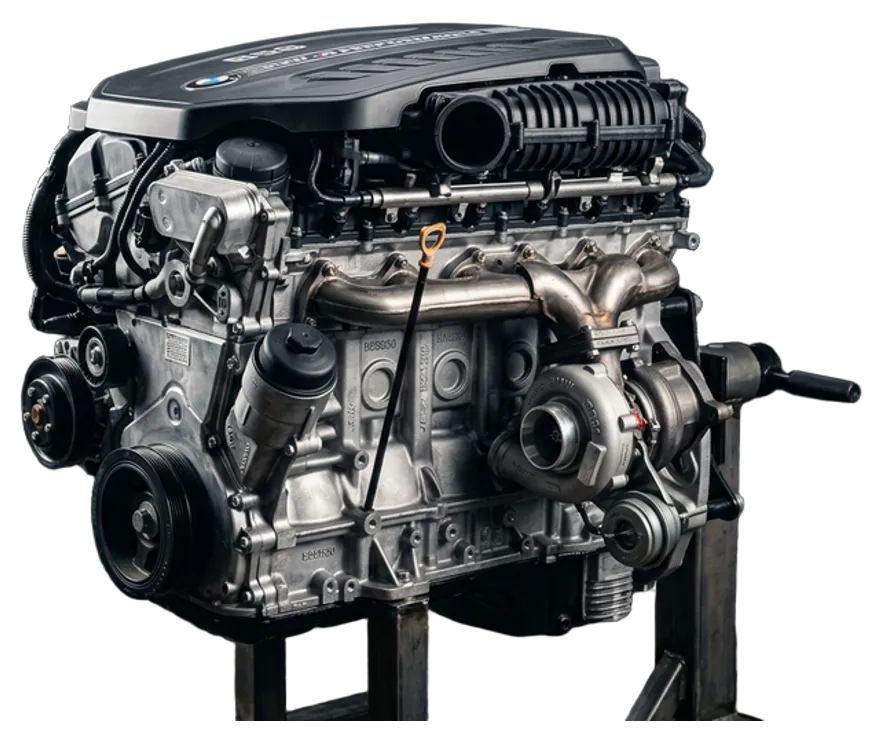
BMW B58 Engine Overview
The B58 replaced the N55 in 2015, debuting in models including the 340i and 740i before spreading across the 2, 3, 4 and 5 Series, X models and the G29 Z4. It uses a single twin-scroll turbocharger, a closed-deck block and an air-to-water intercooler integrated into the intake.
Over its life the engine has moved through several revisions, with later versions bringing changes to internals, fuelling and, in some recent applications, 48V mild-hybrid assistance. Those changes mean a calibration written for one B58 is not automatically correct for another.
The DME generation changed over the engine’s life and is not inferred from the model name, so the exact ECU hardware and software must be identified from the vehicle before the file is read. The ZF 8HP gearbox, fuel octane and any intake, downpipe or cooling upgrades then define what the calibration can safely request.
Configuration
3.0L Inline-Six
Introduced
2015
Turbo System
Single Twin-Scroll Turbo
Key Technology
Integrated Water-to-Air Charge Cooling
Choose Your B58 Tuning Path
Choosing a B58 path starts with the car itself: its condition, the fuel available, its DME generation and what hardware has already been changed. A healthy standard car usually begins with Stage 1, while modified cars benefit from the hardware and fuel guides first.
B58 Stage 1
A focused calibration path for a healthy vehicle on standard hardware.
B58 Stage 2 & Hardware
Supporting components, thermal considerations and next-stage planning.
B58 Reliability Checks
Important checks to complete before requesting a calibration.
B58 Fuel & ECU Setup
Fuel quality, ECU identification and setup-specific planning.
Popular BMW B58 Models
The B58 appears in coupés, saloons and SUVs, and each installation brings its own combination of DME, gearbox, intercooler and cooling package. Starting from the exact model helps confirm which calibration base and supporting information apply.
BMW M240i G42
G42 · c. 2022–presentBMW 340i F30
F30 / F31 / F34 · c. 2015–2019BMW M340i G20
G20 / G21 · c. 2019–presentBMW 540i G30
G30 / G31 · c. 2017–2023BMW 840i G14
G14 / G15 / G16 · c. 2018–presentBMW X3 M40i G01
G01 · c. 2017–2024BMW X4 M40i G02
G02 · c. 2018–2025BMW X5 xDrive40i G05
G05 · 2018–presentECU and Transmission Context
Hardware and software identification is the first step of any B58 project. The DME version determines the read method and calibration base, and the transmission software may need separate consideration where torque delivery changes.
BMW DME — identify from vehicle
DME generation and exact ECU hardware and software vary by vehicle and production date; read them from the car before ordering a file.
ECU Identification
Identify the exact ECU before choosing a calibration route.
Transmission Context
Understand the gearbox setup and ECU–TCU relationship.
Read Method
Choose the correct OBD, Bench or Boot workflow for the vehicle.
What to Check Before Tuning a BMW B58
Before calibrating a BMW B58, the car should be free of active faults and have a clear maintenance history. Ignition components, cooling performance, intake and charge-air connections, fuel quality and existing hardware should all be checked, because a calibration places additional demand on systems that may already be close to their limits.
The correct approach also depends on the B58 generation, DME version, transmission, fuel and installed modifications. A standard car may follow a straightforward Stage 1 path, while upgraded hardware or previous software changes call for a more detailed review before the file is prepared.
If the car has been tuned before, tell us which software was used and supply the original file if you still have it.
B58 Reliability GuideBMW B58 Dyno Projects
BMW M340i G20 B58
Project data to be added
BMW M240i G42 B58
Project data to be added
BMW 540i G30 B58
Project data to be added
BMW B58 File Service
Need a Custom BMW B58 Calibration?
Prepare the original ECU file, vehicle details, fuel and hardware setup before opening a file request.
Open File Service PortalOriginal ECU File
Read via OBD, Bench or Boot
Vehicle Details
Model, year and specification
Fuel Information
Fuel type and octane rating
ECU Identification
Hardware and software version